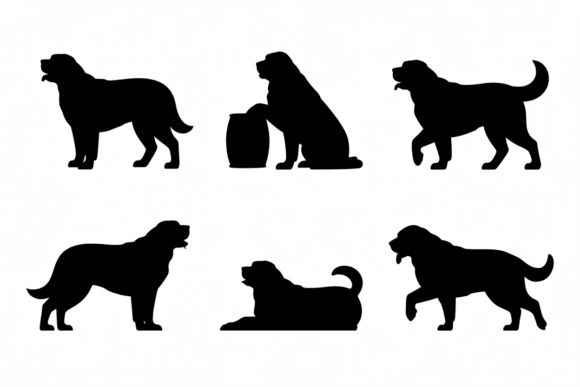
Saint Bernard Dog Silhouettes for Embroidery Projects
When I first opened the Saint Bernard Dog Silhouettes file, I was looking for a design that would work well on a custom tote bag for a local pet boutique. The client wanted something clean, recognizable, and not overly cartoonish. This silhouette immediately stood out because it captures the breed’s gentle, sturdy presence without getting lost in unnecessary detail. The shape is confident, the proportions feel right, and the overall mood is warm and grounded. For any embroidery designer or small shop owner working with dog-themed merchandise, this design offers a strong starting point that can adapt to many finished products.
First Impressions and Visual Personality
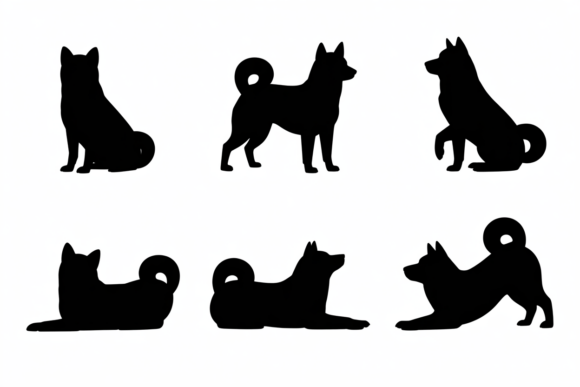
The Saint Bernard Dog Silhouettes design has a quiet, classic feel. It does not try to be cute or flashy. Instead, it relies on the recognizable outline of the breed – the broad head, the drooping ears, the thick neck, and the sturdy body. This makes it a natural fit for projects where you want the dog itself to be the focus, not a lot of decorative extras. The silhouette style also means it works well in single-color embroidery, which is a practical advantage when you are stitching on a variety of fabric colors or need to keep production simple.
When I tested the design in a black thread on a cream-colored sweatshirt, the silhouette read clearly from a few feet away. The dog’s stance is calm and alert, which gives it a dependable, friendly personality. That is a quality that customers often look for in personalized gifts or boutique merchandise. Whether you are making a handmade product for a dog owner or a batch of custom apparel for a rescue event, this design communicates loyalty and warmth without saying a word.
Real Project Performance Across Products
I have used the Saint Bernard Dog Silhouettes in several real projects, and it performs consistently well on different surfaces. Here is how it works in common embroidery scenarios:
- Sweatshirt embroidery – The silhouette stitched cleanly on mid-weight fleece. The solid fill areas held their shape, and the edges remained crisp. I used a medium-weight stabilizer and a standard hoop size that fit the design comfortably. The finished piece looked professional enough for a small shop product.
- Tote bag design – On a canvas tote, the silhouette felt substantial and durable. The stitch density was moderate, so the fabric did not pucker. I tested it with both a satin stitch outline and a fill stitch interior, and both options worked well. The design held up after several washes, which is important for a bag that will see everyday use.
- Embroidered patch – I converted the digital embroidery file into a patch format with a running stitch border. The silhouette shape made it easy to cut around, and the final patch had a tidy, finished look. This would be a strong option for Etsy sellers who want to offer iron-on patches or sew-on badges.
- Baby embroidery – On a soft baby onesie, the design scaled down nicely. I reduced the size slightly, and the silhouette still read clearly. The fabric texture of the onesie was fine enough that the stitches did not distort. Parents who want a personalized gift with a Saint Bernard motif would appreciate this understated style.
- Holiday gifts – For a holiday-themed project, I paired the silhouette with a small text element like “Home” or “Buddy” underneath. The applique design approach also worked: I used the silhouette as a template for cutting fabric, then stitched around it with a satin stitch. The result was a warm, handmade gift that felt both personal and professional.
Where to Use This Design Carefully
No design is perfect for every situation, and the Saint Bernard Dog Silhouettes has a few considerations worth noting. Here are the areas where I recommend extra attention:
- Small hoop sizes – If you are working with a very small hoop, the silhouette may lose some of its detail. The ears and tail can become less distinct when the design is shrunk too much. I suggest testing the size on scrap fabric first to see if the shape still reads well at the dimensions you need.
- Thin or stretchy fabric – On lightweight or stretchy materials, the fill stitch areas may cause some distortion. A good stabilizer is essential here. I recommend a tear-away or cut-away stabilizer depending on the fabric. For stretchy knits, a cut-away stabilizer will help the design keep its shape.
- Dark fabric – The silhouette is a solid shape, so on dark fabric you will need a thread color that provides enough contrast. A white or light gray thread will make the dog stand out clearly. I also tested it with a metallic thread for a subtle sheen, and the result was attractive but required a slower stitch speed to avoid breakage.
- Curved surfaces like caps – The design is a single shape, so it can be hooped on a cap frame, but you need to check that the silhouette does not distort around the curve of the brim. I recommend a test stitch on a practice cap before committing to a production run.
- Dense stitch areas – The silhouette is not overly dense, but the solid fill does require a reasonable number of stitches. If you are using a very thick thread or a heavy fabric, you may need to adjust the stitch density to avoid a stiff or puckered result.
Visual Appeal and Product Value
The Saint Bernard Dog Silhouettes adds a clean, professional look to any finished product. When I showed the embroidered tote bag to a few regular customers, they immediately recognized the breed and commented on how “classy” the design looked. That kind of response is valuable for a craft business because it builds customer trust and makes the product feel worth a higher price point. The silhouette style also works well for brand consistency – if you offer multiple dog breeds in the same silhouette format, your shop will have a cohesive, recognizable look.
For Etsy sellers and handmade shop owners, this design is a strong candidate for personalized gifts. A customer who owns a Saint Bernard will appreciate a custom item that shows their dog’s breed in a tasteful way. The design also works for commercial embroidery projects, such as creating merchandise for a pet store, a veterinary clinic, or a breed-specific club. The giftability of the finished product is high, especially when the embroidery is paired with a thoughtful color choice or a small personalization.
From a printable mockup perspective, the silhouette file is easy to use in previews. You can place it on a t-shirt or tote bag mockup and show customers exactly how the final product will look. This is a big advantage for digital product sellers who want to offer design assets or ready-to-stitch files. The design assets themselves are clean and well-formed, which makes them a good addition to a digital embroidery file library.
Practical Embroidery Designer Notes
Before you use the Saint Bernard Dog Silhouettes in a paid project, here are a few steps I recommend based on my own testing:
- Test on scrap fabric first – Always stitch a sample on a piece of fabric similar to your final product. This will show you how the design behaves with your machine, your thread, and your stabilizer combination.
- Check thread color contrast – The silhouette reads best when the thread color contrasts clearly with the fabric. Test both light-on-dark and dark-on-light combinations to see which one suits your project.
- Review stitch density – The file is a silhouette, so the stitch density will depend on how you convert it to an embroidery file. If you are using a digitizing software, check the density settings and adjust them for your fabric type. A moderate density usually works well for cotton, poly-blends, and canvas.
- Confirm hoop size – The design fits comfortably in a standard hoop, but if you are planning to add text or other elements, make sure your hoop is large enough to accommodate the full layout. It is better to check this before you start stitching.
- Inspect small details – The silhouette has a few subtle curves, especially around the ears and tail. Make sure these areas are not too small for your machine’s needle and thread. If they look too tight, consider enlarging the design slightly.
- Test in black and white mockups – Before you commit to a color scheme, print the design in black and white and place it on a photo of your product. This helps you see how the shape will read at a glance and whether it needs any adjustments.
- Compare light and dark fabric backgrounds – The same design can look very different on a white t-shirt versus a navy sweatshirt. Testing both will help you decide which version to offer to your customers.
- Use proper stabilizer – For most fabrics, a medium-weight cut-away stabilizer will give the best result. For delicate fabrics, a lightweight tear-away may be sufficient. Do not skip this step, as the stabilizer directly affects the stitch quality and the longevity of the finished product.
- Check licensing before selling – The Saint Bernard Dog Silhouettes is provided as a silhouette cut file in SVG and EPS formats. Before you use it for commercial embroidery or sell finished items, confirm the license terms. This is especially important if you are an Etsy seller or a small shop product creator. The description mentions it is ideal for a wide range of DIY crafts, so it likely supports personal and small commercial use, but always verify to be safe.
- Test the design in both large and small formats – The silhouette works at multiple sizes, but the stitch quality can vary. I recommend testing it at least at two different sizes to see how it behaves before you offer it to customers.
Final Thoughts on This Design for Your Embroidery Business
The Saint Bernard Dog Silhouettes is a solid, versatile design that fits well into a craft business or a handmade product lineup. It is not flashy, but it does not need to be. The silhouette style gives it a timeless quality that works across many product types, from custom apparel to embroidered patch projects. If you are an embroidery designer, a small business owner, or a creative entrepreneur looking for a dependable dog silhouette, this file is worth adding to your collection. Just remember to test it on your specific fabric and machine setup, and you will be ready to create finished products that your customers will appreciate.